Menus and growth · 4 min read
A better menu-board rotation starts with a clearer message
Give guests time to read the menu, then make one featured item easy to understand. Plan a useful rotation without relying on invented sales promises.
By Peekaboo Digital · October 26, 2026
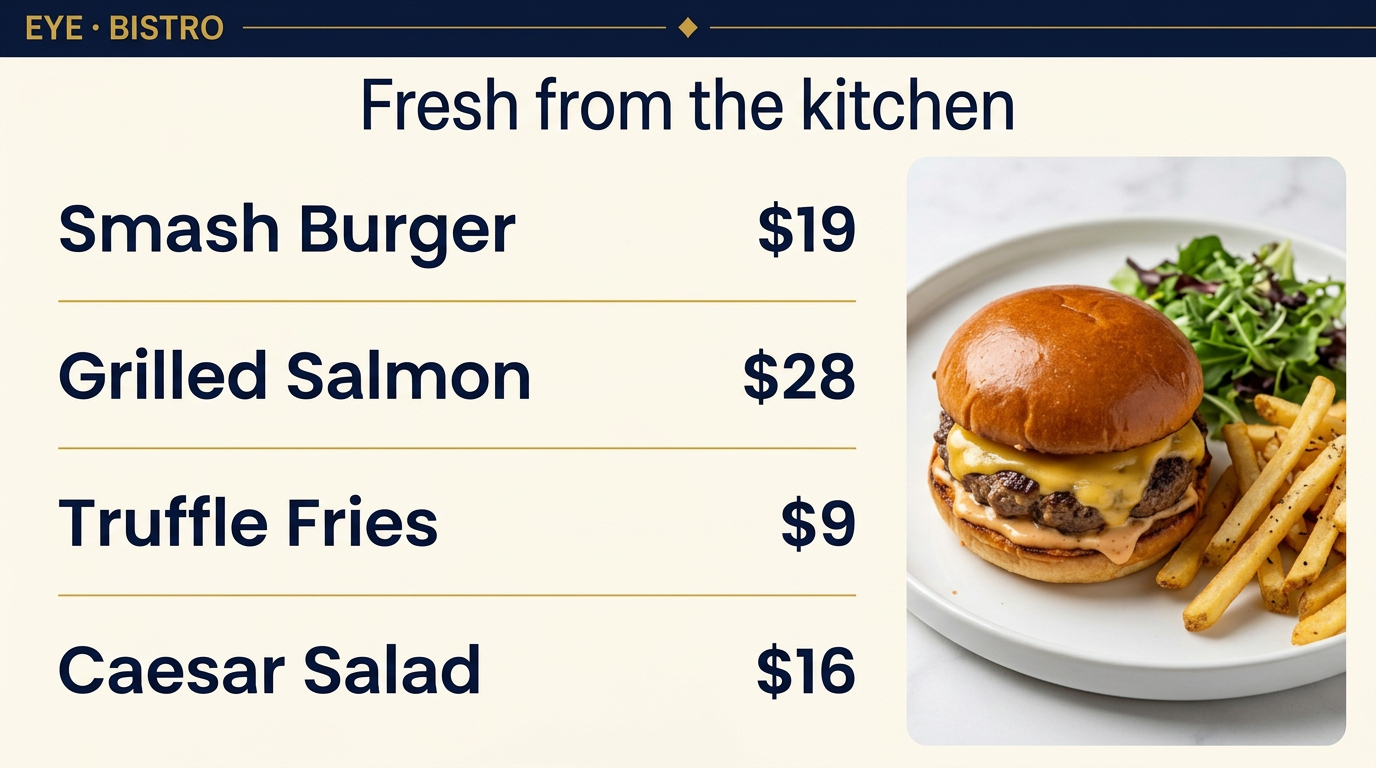
Give the menu and the promotion different jobs
A menu answers practical questions: what is available, what does it cost and what can a guest choose? A promotion focuses attention on one item or offer. Putting both jobs on the same crowded slide can make neither clear. Begin with a readable menu view, then design a separate promotional view with one obvious subject.
EYE includes digital TV menus and rotating restaurant promotions. For your first content plan, list the menu information that must remain easy to find and the single item you want the promotion to feature. Do not assume a digital screen creates demand by itself. The message, location and guest context still matter.
Check the screen from the guest's position
Review the board at the distance and angle where guests actually stand. Can someone read the longest item name and its current price without moving closer? Is the text clear against the background? Do photographs leave enough room for useful information? A layout that looks polished on a laptop may not work above a busy counter.
Checklist: inspect contrast, type size, glare, item names, price accuracy and photograph relevance. Use photographs of the item you actually serve whenever available. The EYE images on this website are illustrative creatives, not photographs of customer deployments or evidence of a restaurant's current menu.
Plan a rotation staff can keep accurate
Give guests enough time to finish reading each view. Observe the rotation during a quiet period and with a few people waiting to order. If someone loses the item they were comparing, the rotation may be too quick or the menu too dense. Prefer fewer purposeful views to a sequence of unrelated messages.
Assign a person to check the menu and promotion before service. Confirm availability, any offer conditions and the next planned review. If your concept needs time-of-day scheduling, ask to verify that capability in the current EYE setup rather than assuming it is included. Rotating slides alone does not establish automatic scheduling or stock-aware promotions.
Evaluate the message without promising a result
Choose one featured item and record when the promotion runs. Observe whether guests understand it and whether staff have to explain it. If you compare sales, use your actual records and note other changes such as weather, service volume, staffing or an outside campaign. A before-and-after number is not, by itself, proof that the board caused the change.
Refresh the content when it becomes inaccurate or no longer useful. Peekaboo Digital offers food photography and paid campaign services that can complement your restaurant's visual presentation. Evaluate the work against your real menu and goals. There is no guaranteed uplift: the practical next step is a clear message, an accurate board and a reviewable plan.
Your next step
Bring a menu-board photo and one item you want to feature to a 15-minute EYE demo. Explore digital menu rotation and how Peekaboo can help with the creative work.